
Looking Back at the 1937 Flood
Contributed by Teresa Douglass, Genealogy Specialist
This year marks the 89th anniversary of the 1937 Ohio River flood, one of the most devastating natural disasters to occur in our region. Spreading from Pittsburgh, Pennsylvania, to Cairo, Illinois, the flood left thousands homeless and caused millions of dollars in damage.
The flood took place in late January and early February of 1937 and impacted a multitude of cities and communities along the Ohio River. Record-breaking rainfalls fell atop already swollen water levels from early through mid-January, causing the Ohio to overflow its banks by the 18th of that month. In the Louisville area, water levels reached a peak of 57 feet on January 27th. At this time, approximately 70% of the city was underwater. New Albany and Jeffersonville were likewise affected, as were numerous small riverside communities in the region. In Harrison County, Indiana, the towns of Mauckport and New Amsterdam were all but destroyed. Downtown Corydon was also affected as Indian Creek spilled deeply into local streets. It was not until February 5th that water levels finally fell below the flood stage.
The flood washed away or severely damaged numerous homes in surrounding urban areas, leaving many families stranded. Flood victims from the New Albany and Jeffersonville areas, as well as local communities such as Mauckport, found shelter and aid throughout Harrison County. They were quartered in lodge halls and private homes throughout the county, and at the Civilian Conservation Corps Camp at the State Forest. Corydon served as the relief headquarters where lodging was arranged, and food, cots, clothing, and other supplies were dispersed.
Here are a few images from our Fires & Floods collection that document the devastation in our area.
Additional photos of the 1937 flood, including images of areas in Corydon and New Albany, are available in the FPG Center Digital Archives’ Fires & Floods collection.
 Mauckport at the flood’s peak.
 New Amsterdam on February 2, 1937, as the river was receding after nearly 3 weeks of having left its banks.
 Rooftops and treetops are all that is visible of the Dam 43 area in Taylor Township.
 Victims of the flood stand on the steps of the Masonic Temple in Corydon as they wait to receive needed supplies.
 Donated goods are stacked along the sidewalk in front of the Masonic Temple.
Looking Back at the 1937 Flood Read More »
 Dr. Fred R. Bierly examines his grandson in this ca. 1940 photograph. Dr. Bierly was a practicing physician at Elizabeth for 43 years.
 Dentist Dr. Howard K. Binkley examines Robert Bosler Jr., a school student at Depauw. Dr. Binkley had a dental practice in Corydon from 1939 to 1975.
 Dr. Carl E. Dillman and county nurse Lillian Johnson (far right) provide immunizations to students at New Amsterdam in March 1940. Dr. Dillman was a general practitioner in Harrison County for 46 years, from 1935 to 1981. Dillman was known as a tireless worker who delivered hundreds of babies and continued to conduct house calls up until his retirement.
 Old Goshen Baptist
 Luther’s Chapel
 Shiloh United Brethren
 Wood’s Chapel
 A 1906 Christmas postcard from Sallie Kintner Jones. The Kintner family operated a prominent inn in downtown Corydon. Sallie inherited the inn following her father’s death in 1880. In 1881, she married prominent local attorney Major William T. Jones. Within a year, William died unexpectedly. Sallie never remarried, but continued to live in and manage the Kintner Inn. She shared management of the hotel with her brother William W. Kintner until his death in 1896, after which, Miss Sallie, as she was known, became the sole innkeeper. She continued to live at the inn, but contracted individuals to manage the business. She closed the hotel in 1920 and died two years later. In the 1980s, the Kintner hotel building was restored to its original appearance and use. In December 1986, the Kintner House reopened as a bed and breakfast and continues as such today.
 A 1951 Christmas card from the Griffin family. Frederick Porter Griffin (1915-2008).
 Harrison County Fairgrounds, 1909. This winter scene features the Little Ring area in the southwestern portion of the property. The bare trees and fresh snow provide a clear view of the seats built into the hillside. The judge’s stand and amphitheater are also in view, and the trail of the spring branch can be seen in the foreground.


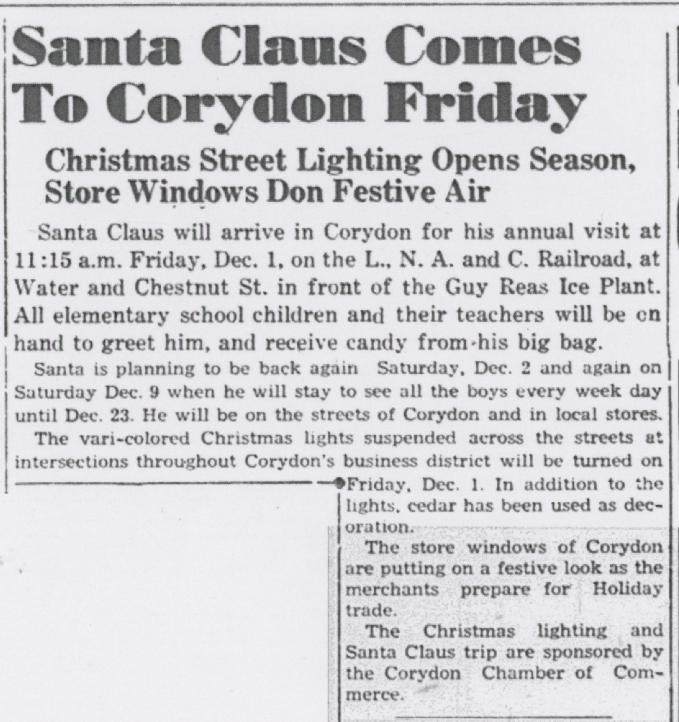
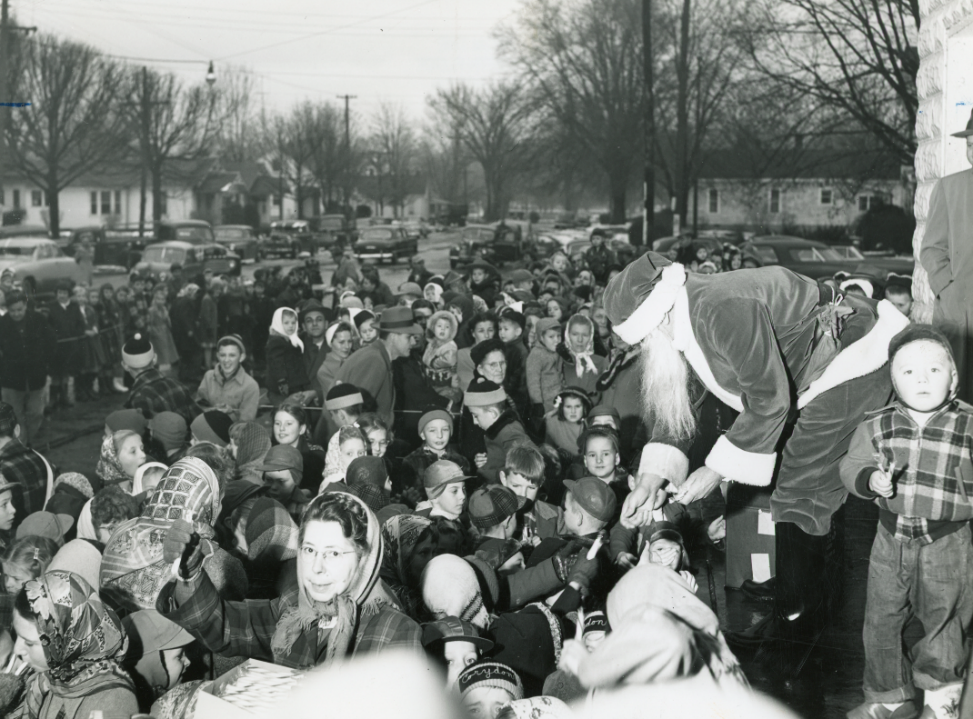
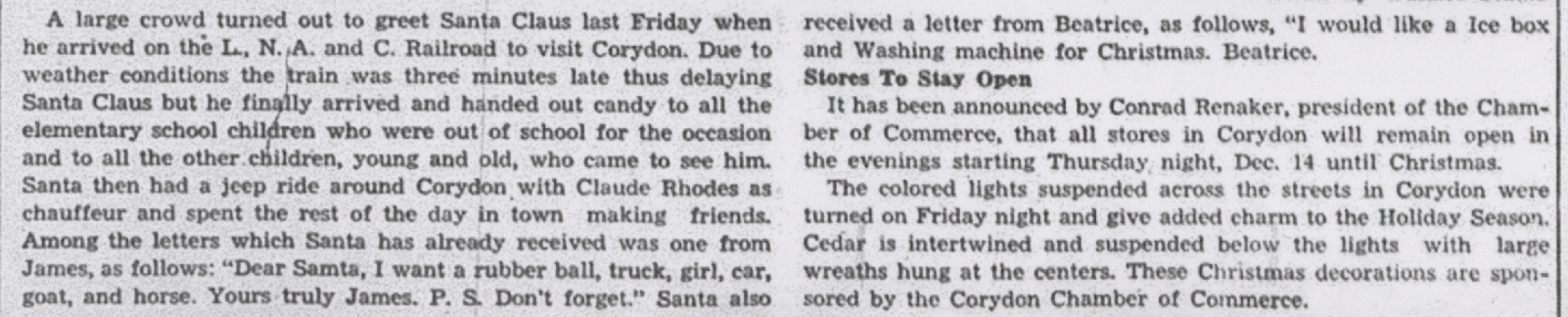
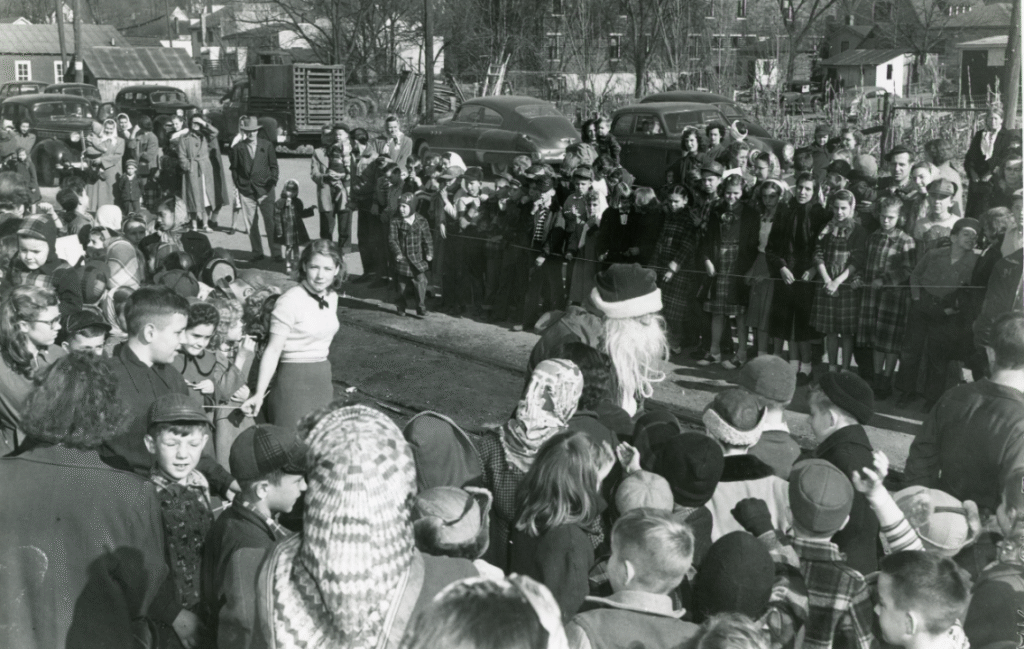
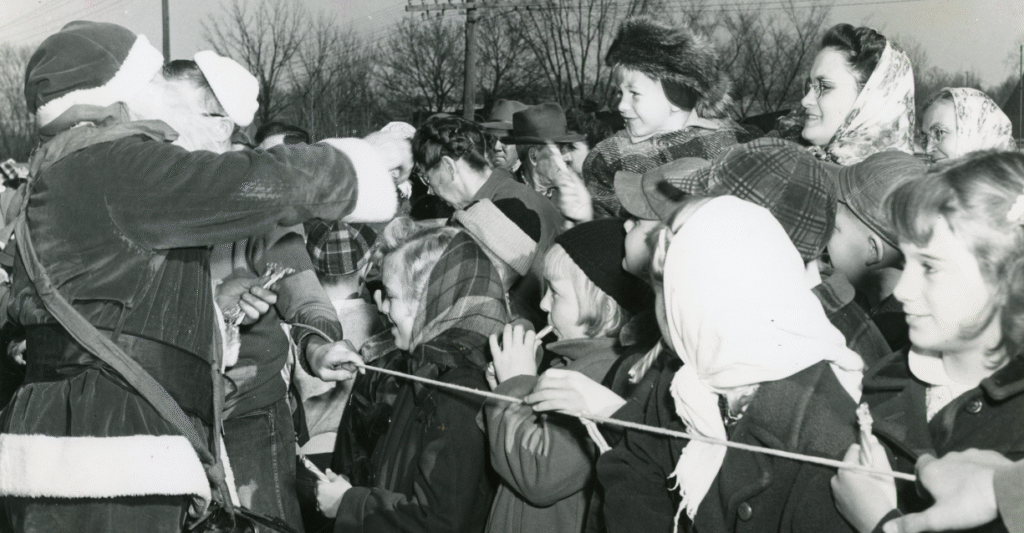


 In December 1961, workers put up decorations at the Harrison County REMC (currently occupied by Indiana Utilities) on West Chestnut Street. Some of you might remember the display of Santa and his reindeer seen here resting along the sidewalk in front of the building waiting to be displayed. The cheerful decoration made an annual appearance above Corydon’s streets for many years.


